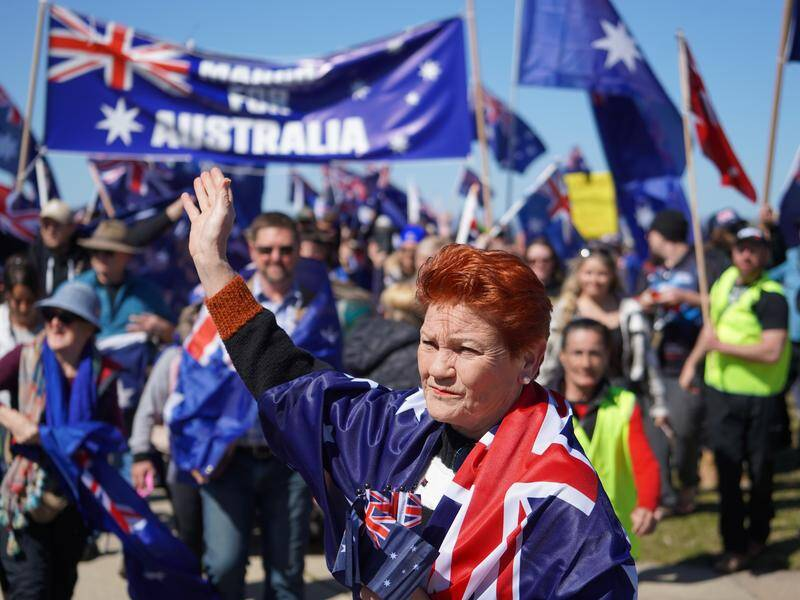
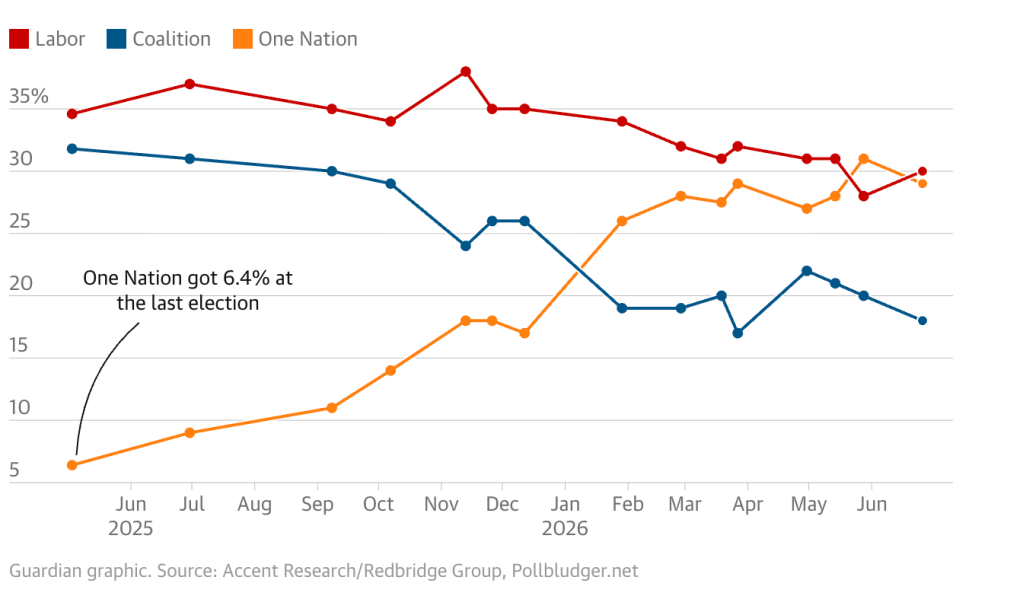
For twenty-eight years, a simmering fever had been brewing at the fringes of far-right Australian politics. Fractured, defeated, dismissed and disendorsed the Hansonites have finally been resurrected. Recent polls from The Guardian record that nearly 60% of Australians would be open to voting for Pauline Hanson’s One Nation at the next federal election rising from a meagre 6% since last year’s election (see graph 1). The swelling reservoir of anti-establishment discontent has fuelled a surge of One nation voters, thereby signalling a shift away from major parties towards more radical alternatives.
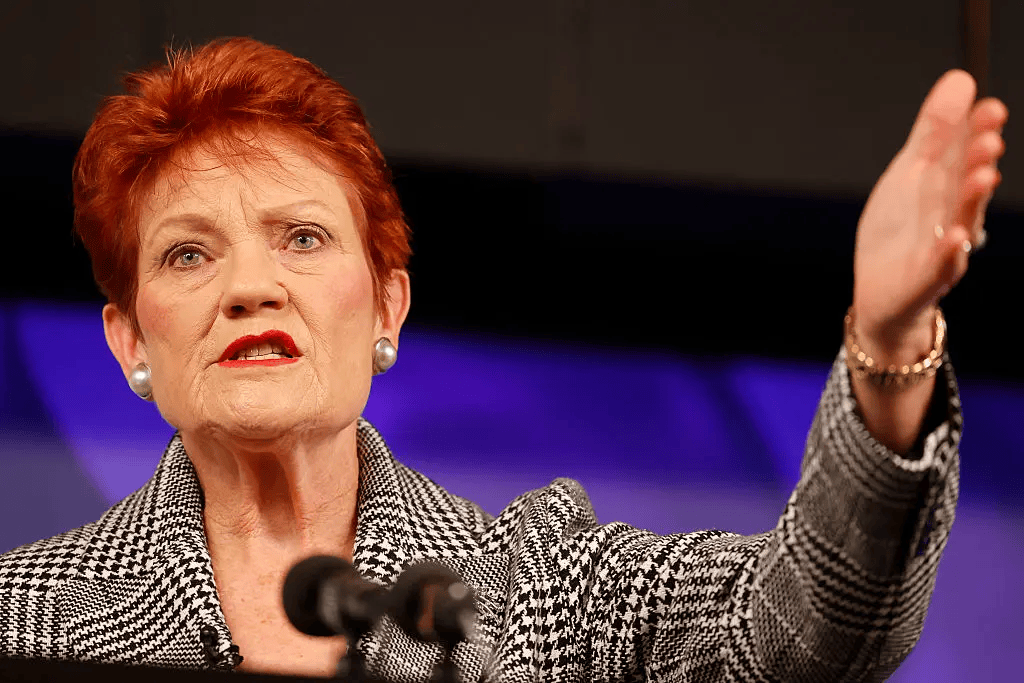
Once priding itself as a nation for its multicultural ideology, Australia has been hit by an unapologetic wave of One Nation “Monoculturalism” amidst rising cost of living pressures and a looming housing crisis. As such, far-right populist leader Pauline Hanson has garnered significant traction across the past few months.
Populism
In Europe, French politician Marine Le Pen won more than twice the vote of President Emmanuel Macron’s centrist party in the European election. Nearly one in four seats in the European Parliament is now held by nationalist and/or populist parties, compared to a more balanced spread previously.
Clips have circulated on social media pointing to her controversial positions on a multitude of social issues including her claim that we have been “swamped by Asians”, insinuating that the multicultural Lakemba was “no longer Australian” only to be met with a heartwarming welcoming from the community after being invited to visit the region. Despite this, the rise has undoubtedly raised a brow for the everyday Australian. We can attribute the widespread phenomenon of nationalism and anti-immigration sentiment to a transnational rightward realignment many western societies have adopted in recent times.


Looking to the Americas, Donald Trump’s stringent border enforcement with ICE law enforcement and his crackdown on illegal immigrants who are “taking our jobs” has dragged the Overton window rightward across the anglosphere. The Overton window is the range of ideas considered acceptable in public debate. As a result, the xenophobic populist rhetoric developed by Hanson which would have been dismissed as extremist are now deemed legitimate argumentation in political discussions.
The Worrying Establishment
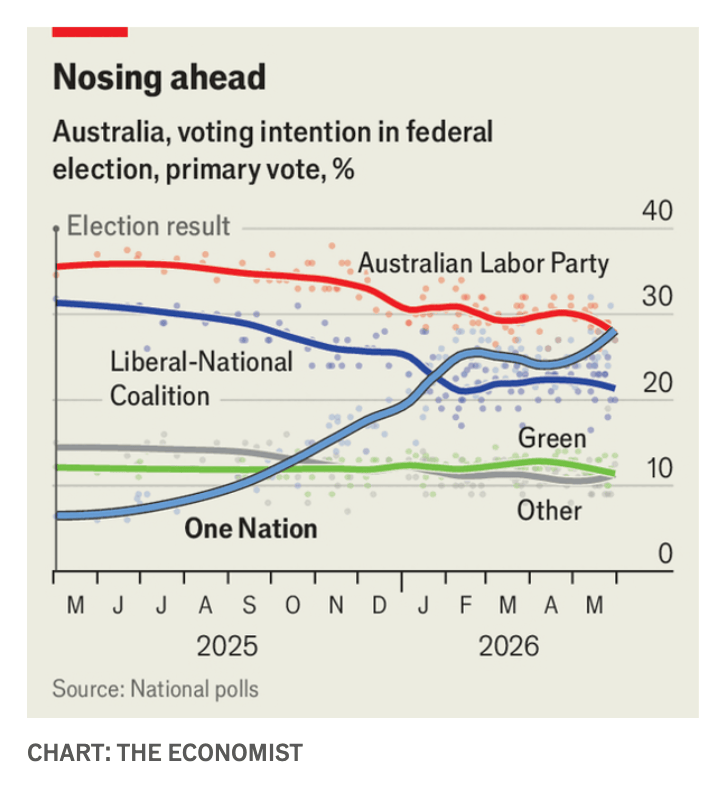
On the 9th of May One Nation took a thumping win at the Farrer by-election with a commanding 39.4% in the primary vote. A newspoll published on the 20th of July 2026 placed One Nation on 30% of the primary vote, level with Labor and ahead of the Coalition at 19%. More than 40,000(totalling nearly 70,000) Australians have signed up to become loyal members since last year’s federal election rivaling the 55,000 and 50,000 members from Labour and Liberal respectively. And, if an election were to be held immediately Anthony Albanese’s ruling Labor Party would win 76 seats in the lower house, out of 150. But One Nation would become Australia’s official opposition, with an astounding 53 seats, up from only two at present. The Liberal-National coalition, for its part, would limp home with a mere dozen.
All of which has gobsmacked an unstable Liberal-National Coalition experiencing the worst polling in its 80 year history, and a dubious identity-crisis following its 4th bout of leadership in Angus Taylor’s appointment, in February earlier this year. From the outskirts, Pauline Hanson’s eccentric ambitions are no longer being heard as a nuisance in a mainstream duopoly between Labour and Liberal but has reverberated its heat into national conversation. To rationalise this rise, we must analyse the countervailing forces which have directly, and/or indirectly knocked Australian politics off its course.
The Vacuum at Home
Years of pessimistic housing prices jumped through the roof, Sydney being rated the 2nd most unaffordable place in the world trailing only Hong Kong. Rent alone now consumes over a third of Australian average incomes with housing prices rising 53.8% over the past 5 years. Such problems are impossible to solve with simple policy fixes. Immigrants have been scapegoated as the ones who fill the houses and strain services of ordinary Australians.
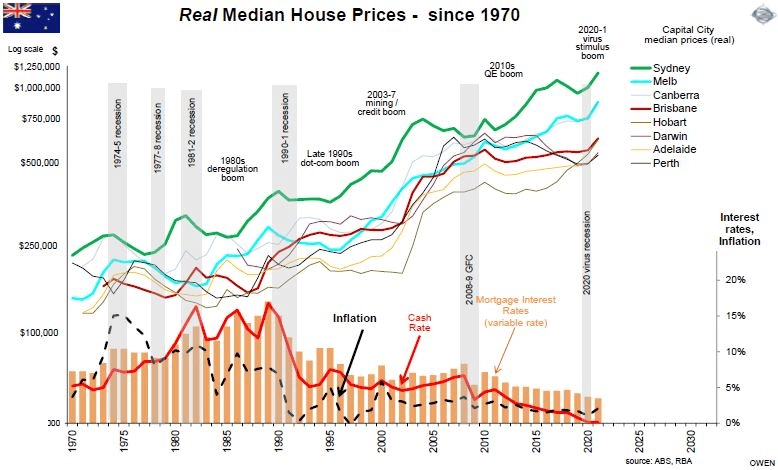

The second accelerant was the disintegration of the natural home for such voters. The Liberal Party has spent the past year consuming itself alive. Sussan Ley’s resignation from Farrer capped a period of factional bloodletting that delivered Angus Taylor the leadership. Consequently, voters who find themselves discontent with both major parties are turning outward and finding common ground in more extreme alternatives.
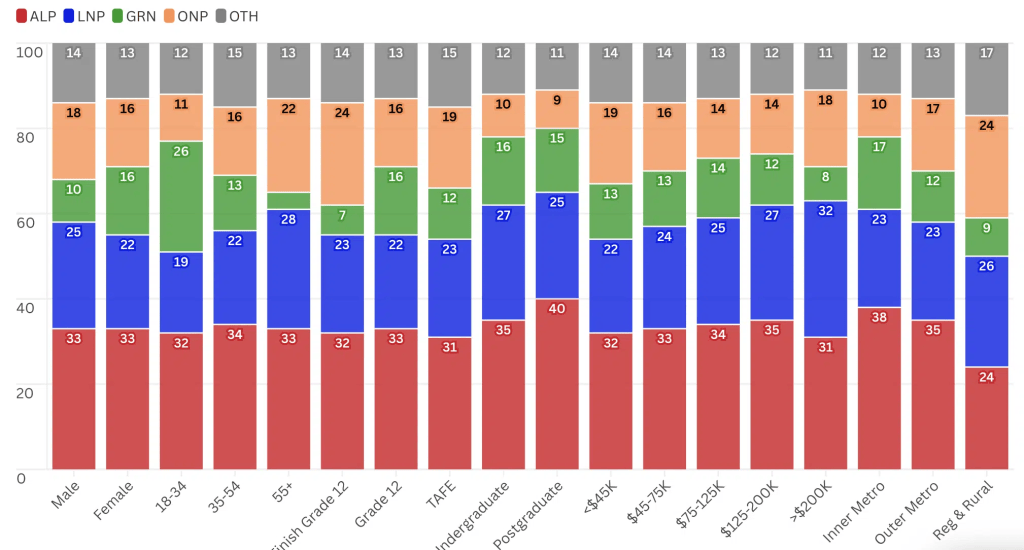
There is, finally, the uncomfortable question of susceptibility. Across Western democracies, the sharpest new political divide runs most prevalently between the university-educated and everyone else, and populist movements draw disproportionately from the latter. One nation is a party which has capitalised on this trend, its growth concentrated in outer-suburban and regional electorates where degrees are scarcer and distrust of institutions runs deeper. It would be both condescending and wrong to call these voters foolish considering that their grievances about housing and living costs are entirely rational. However, the populist dance-around shall not promote troubling solutions to much more sophisticated problems.
Where is the limit?
Rumours have been discussed of Ms Hanson potentially becoming the Prime Minister in the next federal election in 2028, when questioned about her age(72) she said that she is ‘ready’ and has the ‘ability’ to be the PM. However, she faces a massive challenge in dealing with the Australian preferential system which rewards 2nd preference and 3rd preference votes and so on until a majority is reached, possibly jeopardising her chances as the Liberal party is likely to soar in 2nd preference votes. Even at the party’s zenith, in the two-party preferred count Labor was still comfortably ahead at roughly 56% to 44%. After her “monoculture” comment, her support slid, with Roy Morgan falling 9 points within a fortnight. A lesson she must take on in the future to be successful is to strip away from the obsolete roots of her past and take on a more appealing mantle to encompass a larger array of voters.
Pauline is the party. She is the persona, she is the face, and she is the power. It is doubtful that she can have a successor as prominent as herself.
No longer is the question of whether One nation will survive, but how far it can really RISE?
 The Golden Gadfly
Leave a comment