Visual Essays

Photographic sequences that let places, objects, and shadows speak in a literary register.
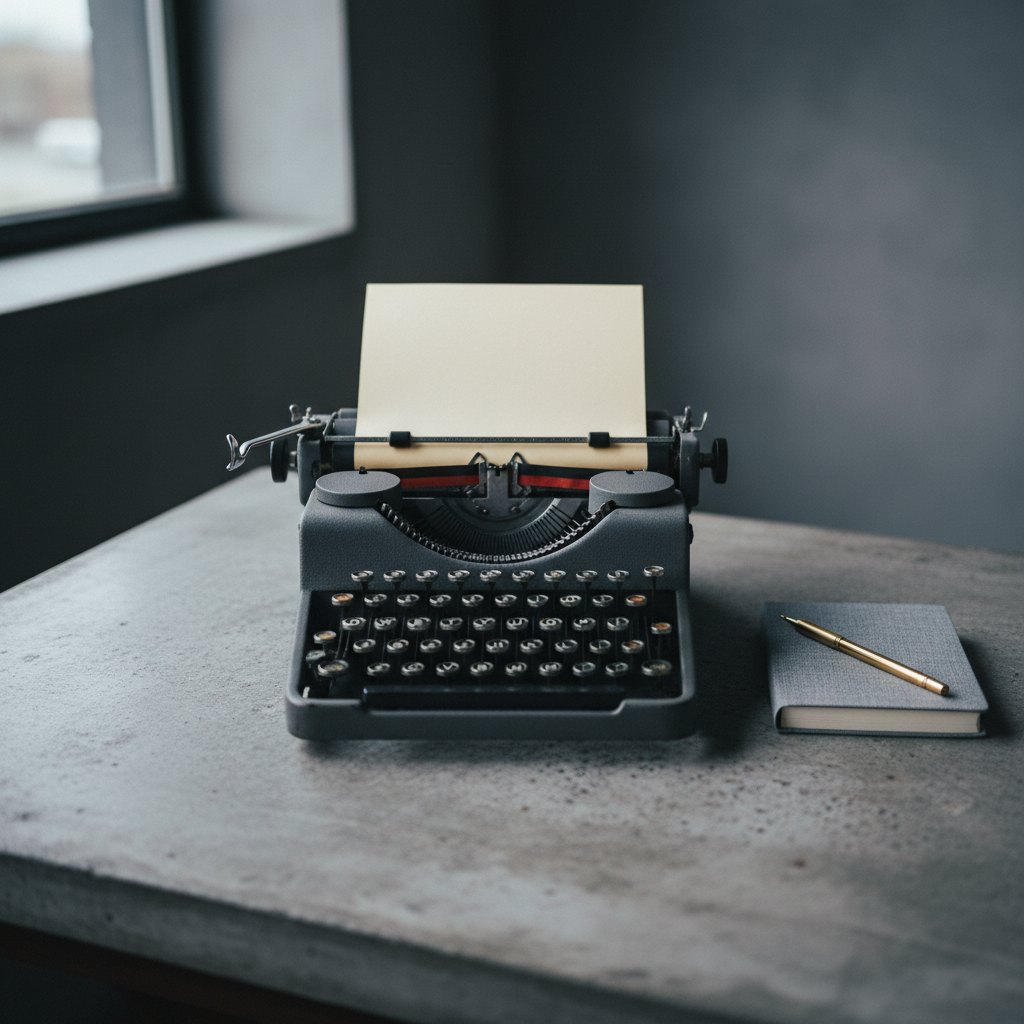
An antique typewriter with deep charcoal metal housing and round, glass-topped keys sits centered on a bare concrete slab table. A single sheet of unmarked, slightly textured paper is rolled into the carriage, its blankness emphasized by the stark surroundings. At the typewriter’s side, a closed notebook with a linen cover and a brass mechanical pencil create a minimal, balanced arrangement. Cool overcast window light enters from the left, casting crisp, elongated shadows and defining the machine’s worn edges. Photographic realism, captured from a low, cinematic angle with shallow depth of field, creates a mood of taut anticipation, as if a bold literary idea is about to be struck into existence.
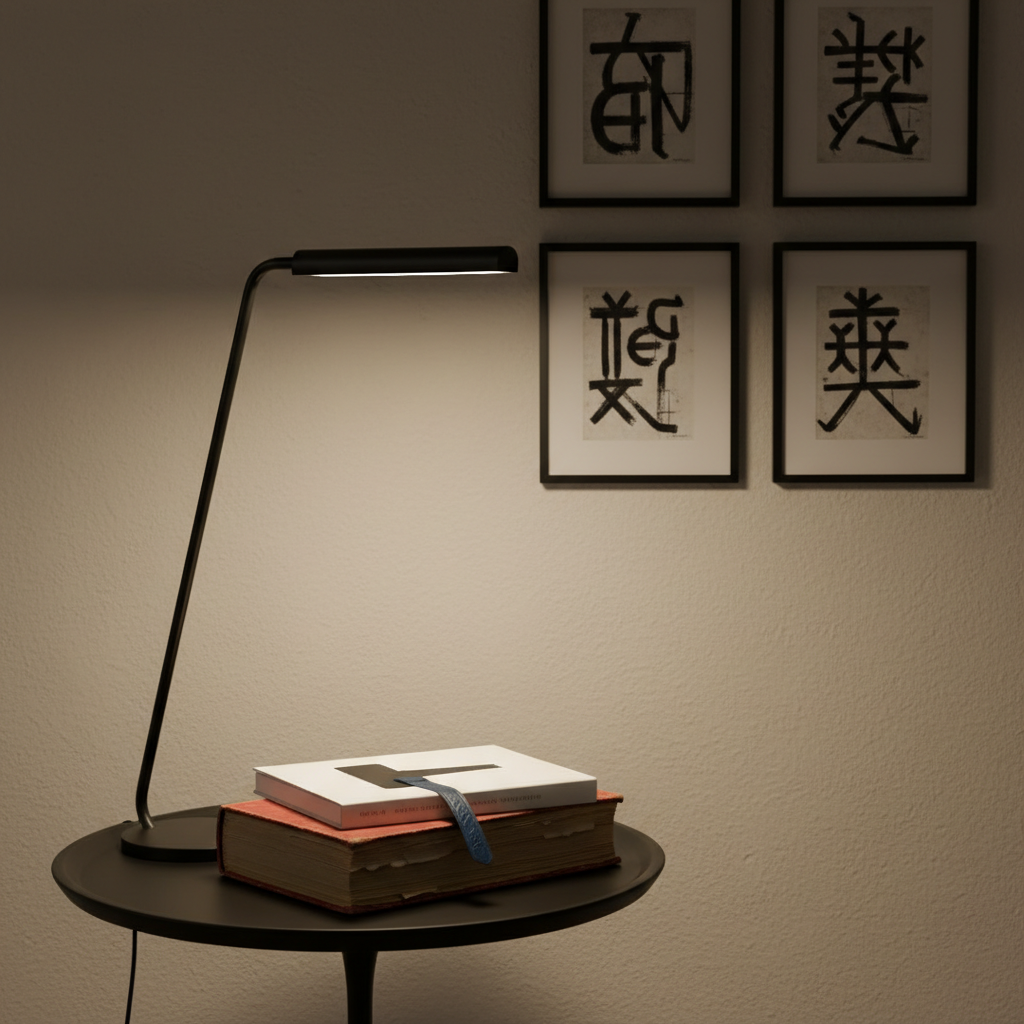
A slim, modern reading lamp arcs over a small stack of contrasting books—one with a cracked cloth spine, another with a glossy minimalist cover—arranged on a matte black side table. A single bookmark protrudes like a quiet interruption. Behind them, a neutral-toned wall is partially covered by framed, abstract monochrome prints that hint at language without using any legible text. The lamp’s warm, focused light creates a dramatic cone over the books, leaving the rest of the room in soft shadow. Photographic realism, shot from a slightly elevated angle with rule-of-thirds composition, evokes a refined, literary salon atmosphere that feels curated, intentional, and quietly provocative.
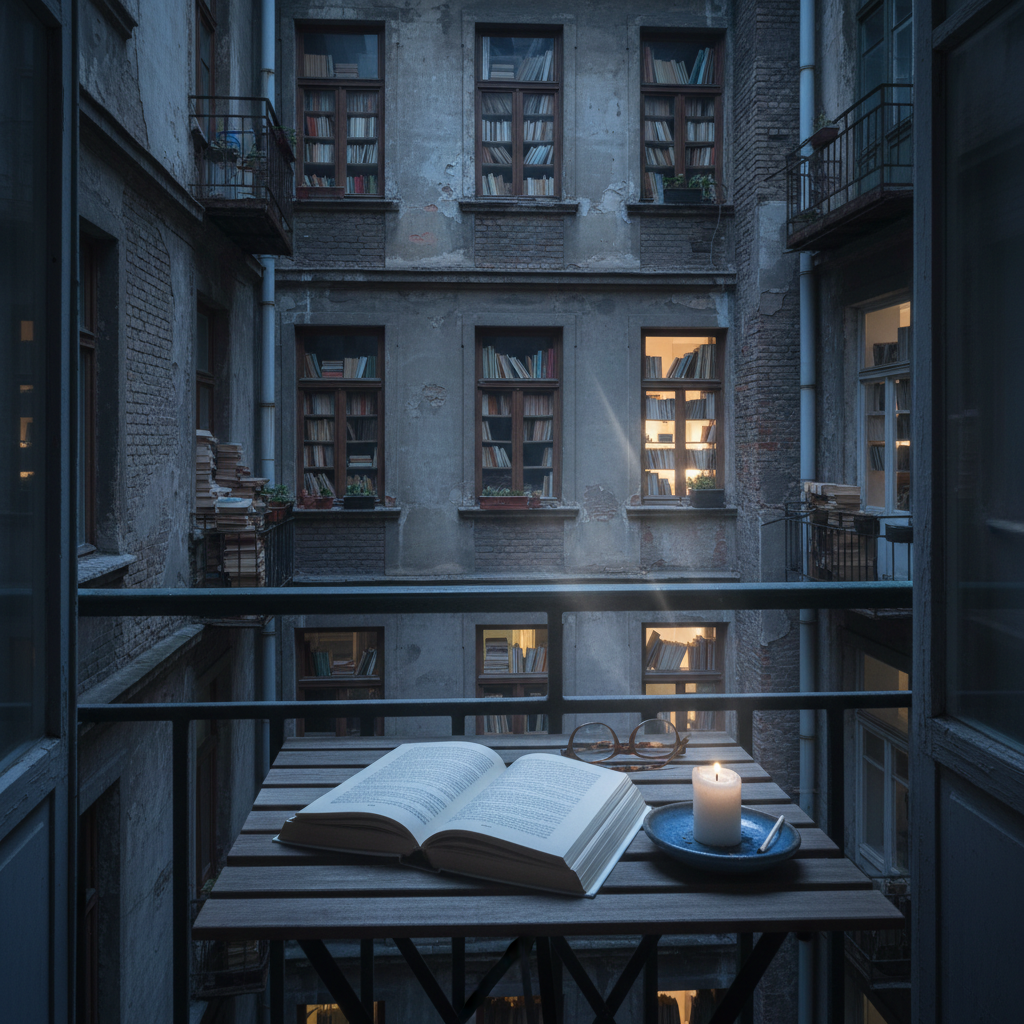
A narrow city balcony overlooks a canyon of old apartment facades, each dotted with small, overflowing bookshelves pressed against windows. In the foreground, on a simple iron café table, lies a single open paperback with a cracked spine, a pair of folded tortoiseshell reading glasses, and a small ceramic saucer holding a spent match and candle stub. The scene is lit by cool, blue-tinged twilight, with the last traces of natural light reflecting off window glass and casting soft glows across the pages. Photographic realism, shot from a slightly elevated three-quarter view, captures a mood of urban introspection and cultural observation, suggesting private reading amid a dense, unseen public.
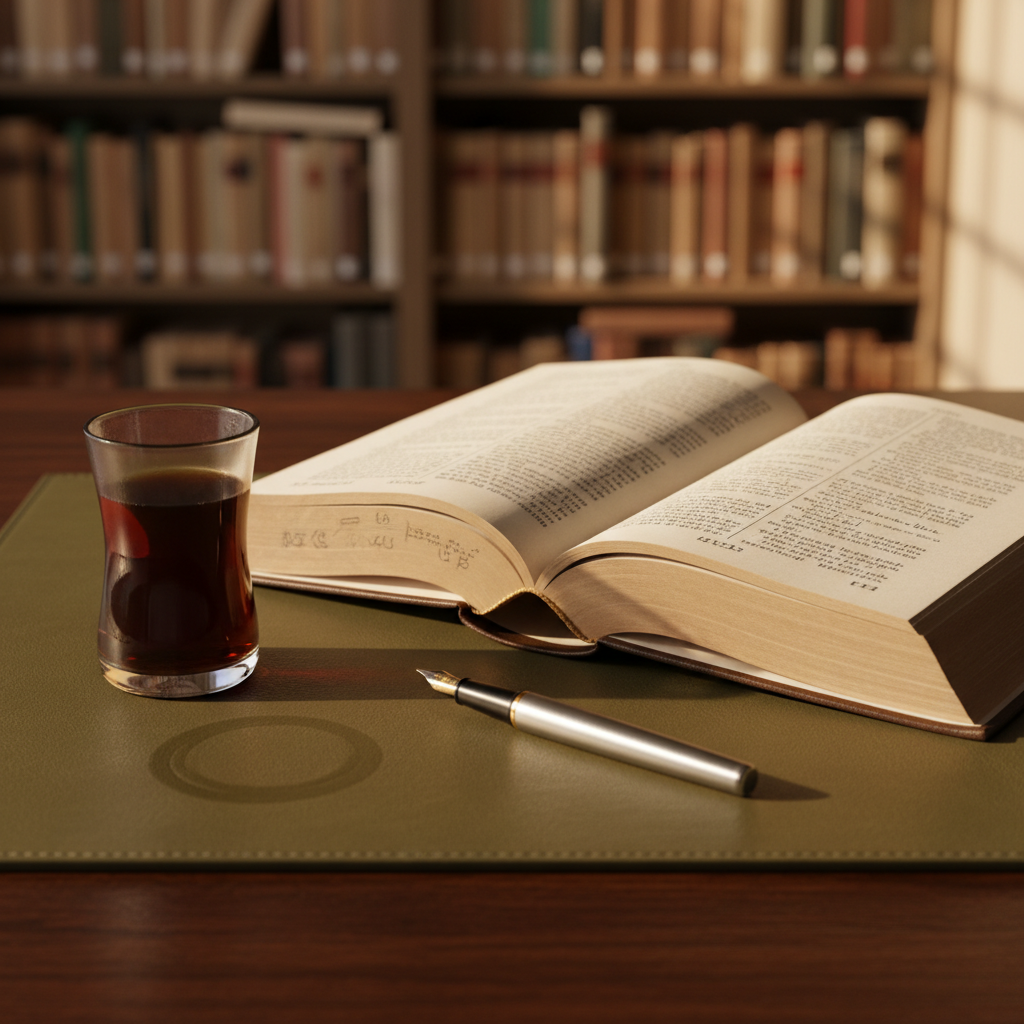
A well-worn hardcover novel lies open on a dark walnut desk, its cream pages slightly curled and densely marked with underlining and marginal symbols. Beside it, a narrow glass of strong black tea leaves a faint ring on a leather blotter, and a sleek metal fountain pen rests diagonally across the text. In the background, tall bookshelves dissolve into a soft blur of colored spines. Late-afternoon natural light pours from an unseen window, casting angled shadows and illuminating paper fibers in photographic realism. Shot at eye level with a shallow depth of field, the mood is contemplative and intellectually charged, suggesting close reading and critical thought in a clean, sophisticated study.

Annotations

Brief curatorial threads linking each image to texts, authors, and the longer histories they echo.

An antique typewriter with deep charcoal metal housing and round, glass-topped keys sits centered on a bare concrete slab table. A single sheet of unmarked, slightly textured paper is rolled into the carriage, its blankness emphasized by the stark surroundings. At the typewriter’s side, a closed notebook with a linen cover and a brass mechanical pencil create a minimal, balanced arrangement. Cool overcast window light enters from the left, casting crisp, elongated shadows and defining the machine’s worn edges. Photographic realism, captured from a low, cinematic angle with shallow depth of field, creates a mood of taut anticipation, as if a bold literary idea is about to be struck into existence.